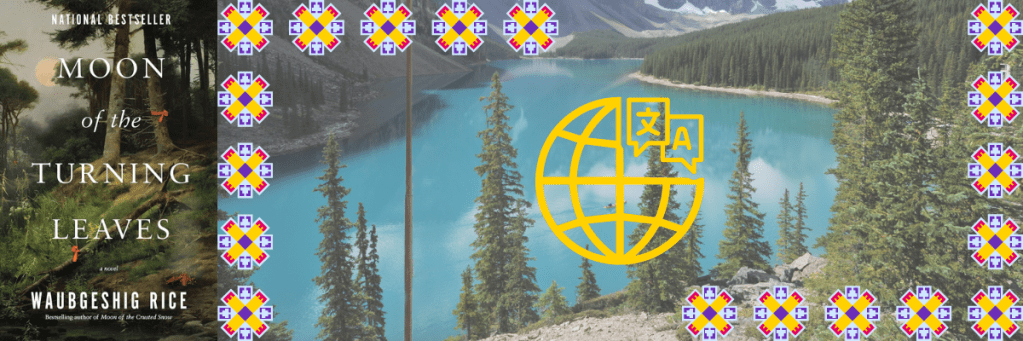
At the beginning of 2024, I picked up Moon of the Crusted Snow by Waubeshig Rice. Truly, I picked it up because I had seen someone speak of the title Moon of the Turning Leaves in a recommendation of Indigenous Literature. Based on the very limited information I had-the title and the author’s identity as Indigenous to Turtle Island-I decided to pick up the series. I mean, the title mentioned leaves, and if you know me, you know I love a good leaf, so I had to. When I read Moon of the Crusted Snow, I liked it, but had a sense that something was missing from it. I gave the novel 4 stars because the writing and the plotting was solid, and I felt that it fulfilled the promise of the blurb. Still, I felt I had missed something fundamental about the book and why it was so beloved. It didn’t feel like it was everything I needed to know about these people, their community, or this world gone to shit. It wasn’t what I had expected when I saw it beneath the “Thriller” genre tag. Perhaps my definition of what constitutes a thriller was a bit narrow at the time.
In the interim, I was lucky to have picked up and read the short story collection Sword Stone Table, where Waubgeshig Rice’s “Sword in the Stone” retelling entitled “Heartbeat” became solidified as one of my favorite short stories AND one of my favorite Arthurian retellings all at once.
Moon of the Turning Leaves is a little less than a hundred pages more than Moon of the Crusted Snow. I wasn’t specifically struck by any quotations the way MotCS had, but I was riveted by the story in a way the first one hadn’t captured me. It takes place something like twelve years later, the tribe has made do, but is finding their surroundings lacking in the resources they need. The whole world feels eerie, and still we don’t know what has happened to the world beyond their reservation and the community they made. At the end of the book, we still don’t know, but we see more of the world Rice has envisioned and it bears eerie similarity to our own in ways I believe we would all prefer it did not. There is racism and violence and death, but so too is there family, community, and hope. The horrors of our white supremacist present have reached a point of fruition, but that evil is, at least in part, defeated by the tribe’s return to their original teachings, language, and <spolier>.
The thing I most appreciated about this book was the way in which it brings forward the need to revive the old language that colonization took from them by force, in this case Ojibwemowin or Anishinaabemowin, the language of the Ojibwe people of Northern Turtle Island, in what is now Canada and the United States. This is one language of many that has been intentionally suffocated by European colonization.
I happened to read this book shortly after returning from my summer residency for the Pan European MFA program at Cedar Crest College. So far, I have been on two of the three required residencies. My first residency was in 2020, and so while I did not in fact go to Barcelona for the program that year, I learned about Catalan, the literary culture in Barcelona, and the colonial activities that have flattened Europe as surely as they have flattened the United States.
I took a break before my second residency was meant to begin. I was burnt out and traumatized and my creative spark needed a gentler kindling, but I decided in 2023 that I was going to come back for summer 2024. Having always had a minor obsession with Ireland as the presumptive homeland of at least some fraction of my ancestors, this was the one residency of the three that most excited me. There too, the literary culture thrives. There are plaques all over to commemorate the places visited in Ulysses by Bloom, statues of Oscar Wilde, and whole sections of bookstores devoted solely to Irish writers. Their language and unique culture is infused into their writing. There is something distinctly Irish about it all.
In Moon of the Turning Leaves, the characters make their way south in an attempt to find a homeland they’ve never seen, but have told stories of for as long as they have been separated. They encounter more like them, and find they can’t understand them totally because they had not been successful in the revival of their language. All of their native speakers had died, so there was no one to teach it.
Cultures survive on their stories and within their languages. The structure, or grammar, of a language can tell you a lot about the people, their process of thought, what they respect and admire, and how that culture views the world. When you cut a people off from their cultural context, especially in so violent a way as colonization has done in the Americas, you cut off a piece of them. Telling stories is vitally important. Telling stories in the language of the culture of the story? In the words of Bernadette Banner, tis peak, ma’lord.
That, I believe, is the power of literature. We should all know by now that literature preserves language, but I believe that literature can revive it as well. Because of indigenous literary works, I know a random smattering of Ojibwemowin. Off the top of my head I can only recall the phrase chi-miigwech, but I recognize more when I read it. Anishanaabe writers have been very good about working towards cultural revival of their language through literary works as one of the more published tribes I know of, and I would really love to see more of that with even more indigenous communities across the globe.
Something I think would be a significant help towards the revival of languages through literature for colonized peoples is the literary magazine. I know that all over this country literary magazines are enraptured in ever shorter cycles of birth and death, but as a bookish community I think we have the ability and power to create and rally behind new literary magazines that focus on decolonial themes and work towards the preservation of strategically marginalized and demonized cultures the world over.
A Call to Action
It has been brought to my attention since I posted this that the Wompanoag people are making a concerted effort to bring their language back to the people. I live just northwest of land traditionally stewarded by the Wampanoag people. If you have the means, consider donating towards their efforts.
Thank you!
 The Druid Scholar
Leave a comment